LED Exports Hit USD 22 Billion; Chinese Enterprises Must Stay Alert to International Competition
Release Time:2020-03-17 11:20:00 Browse:33times Responsible Editor:Qingdao Huarui Zhichuang Technology Co., Ltd.
As the LED industry shifts to mainland China, China has gradually become a major global base for LED manufacturing.
Nevertheless, for Chinese LED enterprises, expanding into and capturing global markets represents their ultimate goal. Therefore, guided by strategies such as the Belt and Road Initiative, Chinese companies have seized the opportunity to enter overseas markets, enabling Chinese LED products to quickly go global.
Statistics from the *2017–2018 Monthly Monitoring Report on China’s LED Lighting Product Exports* released by the GGII (Gaogong LED Industry Research Institute) show that China’s total export value of LED lighting products reached approximately USD 21.958 billion in 2017, a year‑on‑year increase of 38%. The export volume stood at around 16.886 billion units, rising by 23% year‑on‑year.
According to statistics from GGII (Gaogong LED Industry Research Institute), there were approximately 22,000 Chinese enterprises exporting LED lighting products in 2017 (including trading companies and manufacturers). The top ten exporters recorded a combined export value of USD 2.487 billion, accounting for 11% of the total export volume.
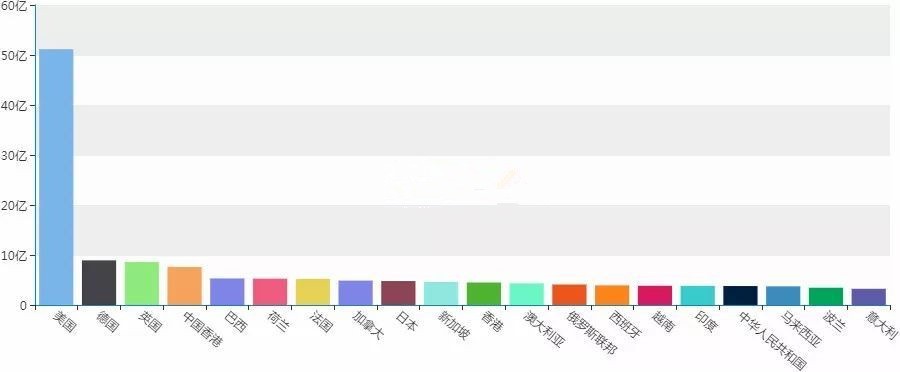
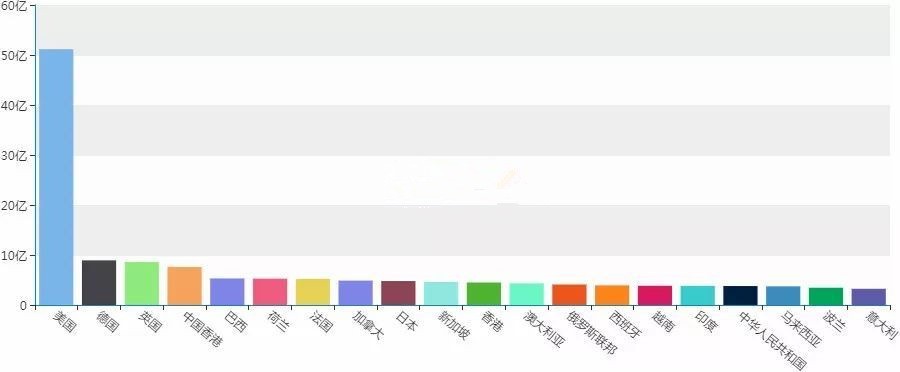
Data shows that in 2017, the top export destination for China’s LED lighting products further strengthened its position, with its share rising to 25.3%. Brazil and India saw their imports of Chinese LED lighting surge by nearly 157% and 49% respectively, securing places among China’s top ten export destinations for LED lighting. In addition, South America, the Middle East, Vietnam and other regions and countries registered the fastest growth in LED lighting imports.
Among exported LED lighting product categories, LED bulbs account for the largest export volume, mainly because they serve as direct replacements for incandescent lamps. LED panel lights, an increasingly popular option for commercial lighting, have also seen their export volume rise year after year.
In addition, high bay lights deserve special mention. As more enterprises enter this segment, output of LED high bay lights has peaked at this stage. Nevertheless, market penetration of LED products continues to rise rapidly. Therefore, there remains substantial room for growth in China’s export value of LED high bay lights in the future.
LED球泡灯
Data from GGII’s *2017–2018 Monthly Monitoring Report on China’s LED Lighting Product Exports* shows that China’s total export value of LED bulbs reached USD 3.375 billion in 2017, with an export volume of 3.047 billion units.
The top ten exporters recorded a combined export value of approximately USD 1.48 billion, accounting for 44% of total LED bulb exports. Yankon Lighting, TOSPO Lighting and Everlight Electronics took the first, second and third places respectively.
As China’s top single exported lighting product, LED bulbs accounted for nearly 16% of the total export value of all luminaire categories in 2017. Looking at export destinations of the top ten enterprises, the United States ranked first with exports reaching USD 464 million, representing 31.34%. The European market came second at USD 409 million, accounting for 27.64%.
LED Panel Lights
According to GGII’s *2017–2018 Monthly Monitoring Report on China’s LED Lighting Product Exports*, China’s total export value of LED panel lights reached approximately USD 1.784 billion in 2017, with an export volume of around 345 million units.
Among them, the top ten enterprises achieved a combined export value of USD 233 million, accounting for 13% of the total export value of panel lights.
Data shows that the top ten Chinese enterprises account for only 13% of total LED panel light exports, and the gap among these top exporters is not significant. In addition, statistics indicate that there were as many as 5,700 Chinese exporters of LED panel lights in 2017. This demonstrates a low market concentration for LED panel light exports.
LED Downlights
According to GGII’s *2017–2018 Monthly Monitoring Report on China’s LED Lighting Product Exports*, China’s total export value of LED downlights reached USD 894 million in 2017, with an export volume of 218 million units.
Among them, the top ten enterprises achieved a combined export value of approximately USD 191 million, accounting for 21% of total LED downlight exports. Lighterleader, Minbao Lighting and Yankon Lighting ranked first, second and third respectively.
It is worth noting that the top ten exporters account for only 21% of total LED downlight exports, indicating that export distribution for LED downlights remains relatively fragmented. As in‑depth consolidation continues across the LED industry, production and exports of LED downlights are expected to become more concentrated in the future.
LED High Bay Lights
According to GGII’s *2017–2018 Monthly Monitoring Report on China’s LED Lighting Product Exports*, China’s total export value of LED high bay lights reached USD 319 million in 2017, a year‑on‑year increase of 87%. The export volume stood at approximately 5.26 million units, rising 93% year‑on‑year.
Among them, the top ten enterprises achieved a combined export value of approximately USD 118 million, accounting for 37% of the total exports of high bay lights.
Statistics show that the top ten enterprises mainly export to European and American countries. Their LED high bay light exports to Europe and the United States reached USD 76.0785 million, accounting for 64.47% of their total exports. Due to heavy overlap in export destinations and a growing number of market participants, competition in the LED high bay light market will inevitably grow fiercer.
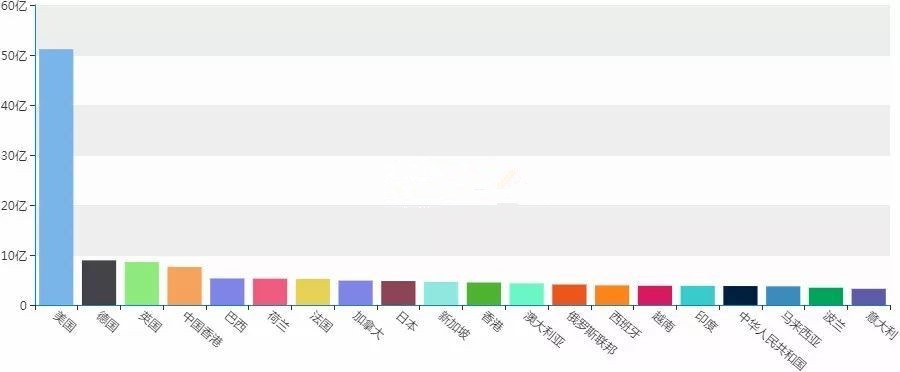
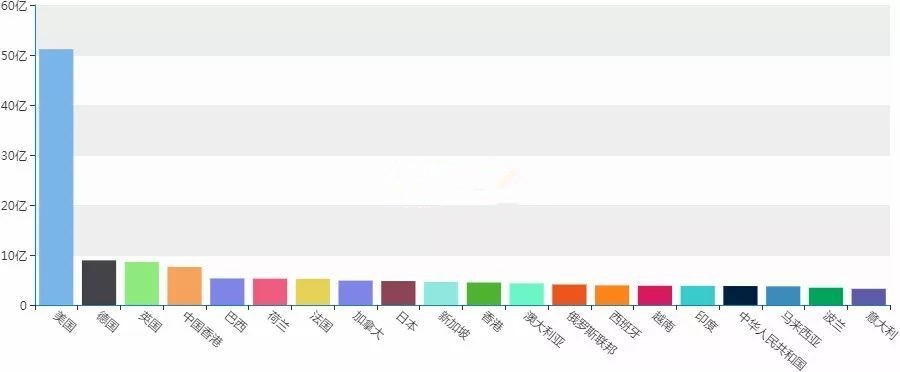
In addition, looking at China’s export destinations for LED lighting products in 2017, the leading markets were the United States (25.34%), Germany (4.42%), the United Kingdom (4.26%), Hong Kong of China (3.76%) and Brazil (2.63%). The United States alone accounted for one quarter of the industry’s total exports. Globally, North America and Europe together represented 56.18% of the entire lighting market.
As major export markets for China’s LED lighting products, North America and Europe impose stringent requirements on LED goods. Nevertheless, there are varying degrees of differences in regulatory directives for LED products between these two regions. How to comply with regulatory requirements and market demands of both regions has long been a key concern for Chinese manufacturers.
Furthermore, relevant laws and regulations for the North American market are continuously updated, raising the bar for market access. Notably, DLC officially released the technical requirements of Solid‑State Lighting Product Standard Version 4.3 on March 26, US local time, 2018.
This DLC standard was upgraded from V4.1 to V4.2 and then to V4.3. It has no direct impact on most products already listed under DLC. Going forward, all DLC submissions must use the new V4.3 submission forms; old V4.2 forms will no longer be accepted and will trigger upload errors. (For detailed revision notes, please refer to the release document *Solid-State Lighting Product Standard, DLC V4.3 Official Release*.)
Before expanding into international markets, Chinese LED exporters need to carefully study local market requirements for product safety, performance and other aspects, and then conduct targeted R&D to develop compliant products. In recent years, recalls of Chinese LED products in global markets have occurred frequently, largely because products fail to meet certain regional requirements.
Chinese LED exporters should also pay attention to the much‑discussed China‑US trade war and Section 337 Investigations.
First, let us look at the China‑US trade war. Although the US has not yet released its tariff list for Chinese goods, it remains unknown whether LED products will be included on the proposed tariff list for Chinese imports. Nevertheless, the outbreak of the China‑US trade war is bound to increase exchange rate risks between the US dollar and RMB. Therefore, Chinese exporters need to carefully assess such currency risks.
Another concern is the **Section 337 Investigation**. In March, US LED enterprises filed two separate Section 337 investigations against Chinese companies, ensnaring many major exporters to the US. Regardless of whether infringement is proven, these cases reveal the disadvantaged position of Chinese enterprises in international trade.
Chinese enterprises have repeatedly suffered losses in international trade in this regard. Moreover, the development of China’s LED industry has put international peers under heavy survival pressure. Using patent measures to target Chinese firms has become a common tactic adopted by global competitors.
Therefore, if Chinese enterprises hope to reverse their disadvantaged position in international trade, they must first strengthen their own capabilities. Chinese companies are frequently targeted by global competitors mainly due to insufficient innovation capacity, prevalent copycat practices, widespread imitation and disregard for intellectual property rights — issues that have drawn widespread criticism. For Chinese LED enterprises, it is necessary to reduce and even eliminate potential legal vulnerabilities at the source to avoid unnecessary disputes.
Secondly, when faced with patent disputes, Chinese enterprises must respond proactively and turn passivity into initiative. In international trade, being sued is not entirely negative. With proper handling, litigation can serve as a special form of corporate publicity and indirectly help expand brand influence.
Admittedly, although the global market environment facing Chinese enterprises is far more complex than the domestic market, as major players in the worldwide lighting market, Chinese firms must make thorough preparations before going overseas. They need to build a trade protection network covering technology, patents, product quality, branding and other dimensions, so as to avoid falling victim to global competitors’ strategy of “letting fish grow before catching them”.
Previous:What is Smart Lighting? Widespread Applications of Smart Lighting
Next:It's all gone.
Back to List