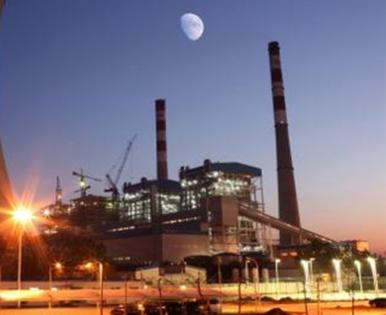
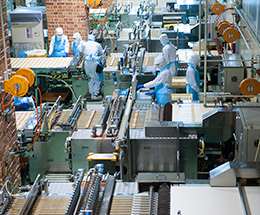
Industrial plant lighting mainly includes production workshop lighting, general factory lighting, and warehouse lighting. Among them, production workshop lighting has relatively high requirements, generally ranging from **400 lx to 1000 lx**. General plant lighting is preferably **200 lx to 300 lx**, while warehouse lighting only requires **50 lx to 100 lx**. Industrial lighting shall ensure the comfort and safety of workers while meeting specified illuminance levels, and anti-glare treatment shall be adopted.
Plant lighting defines the level of general lighting based on the details, color contrast, and surface texture of the observed objects on horizontal, vertical, or inclined working surfaces. Proper general lighting balances the illumination level across the entire floor area and working planes. Glare control shall be emphasized to ensure that light rays directly reach working surfaces without causing direct or reflected glare. Light sources with comfortable color tones and good color rendering performance may be used, along with concealed light sources or reasonable combinations of light sources with grilles and reflectors.
Generally, cranes are installed in automobile manufacturing plants, with lifting capacities ranging from **3–5 tons** for light-duty models up to hundreds of tons (the maximum lifting capacity of a single crane in the machinery industry currently reaches 800 tons). Therefore, factory lighting is typically realized using luminaires mounted on the roof trusses.

 Details